- Braun & Brains
- Posts
- You're Invited: The Best Tech Meetup in NYC
You're Invited: The Best Tech Meetup in NYC
PLUS: The CEO who admitted lying about $7M in revenue, the real MacBook Neo debate, and how to turn your podcast into clips with Claude Cowork.

Rachel Braun
March 09, 2026
Hello world,
Three things I need say:
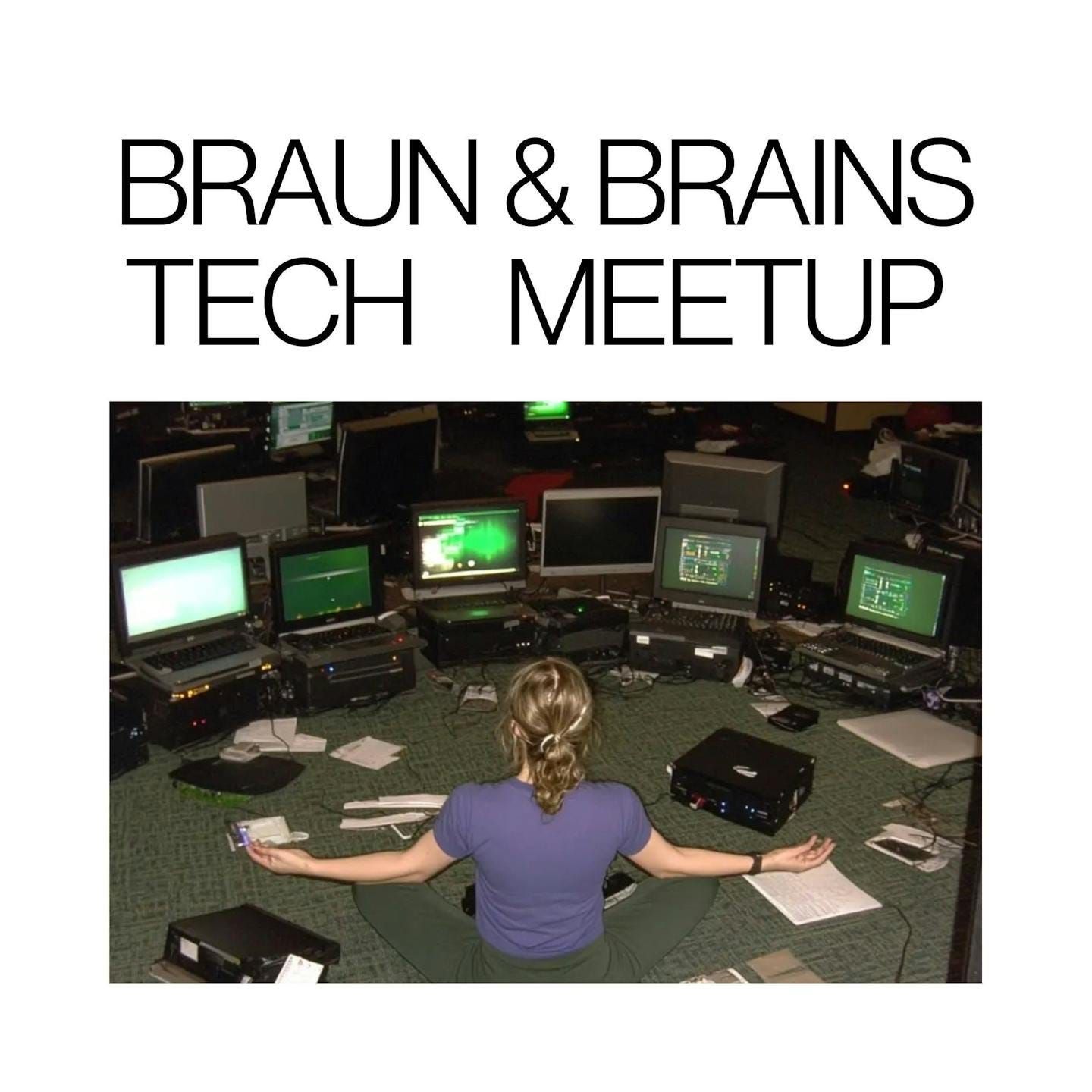
I am hosting an event and you’re all invited! If you write about tech on Substack, or you read about tech on Substack, I want to buy you a drink. The first ten people who arrive get a beverage on me. RSVP is required. If you don’t get on the list, please don’t fret. I’m planning to host more in the future. Maybe even in SF. Where else should I go? I’m getting excited just thinking about it. RSVP HERE.
I’m also commissioning my friend’s little sister to make merch. I sent a lot of blank hats to her apartment, so please send positive vibes because I have no idea where she will store them. I’m not going to bring that many to the event because if people won’t take them, I don’t really want to keep a bunch of hats with Braun & Brains on them. It feels a bit too self-obsessed. Let me know if you want one and I can bring one to the meetup for you or send one to you, even if you can’t make it IRL.
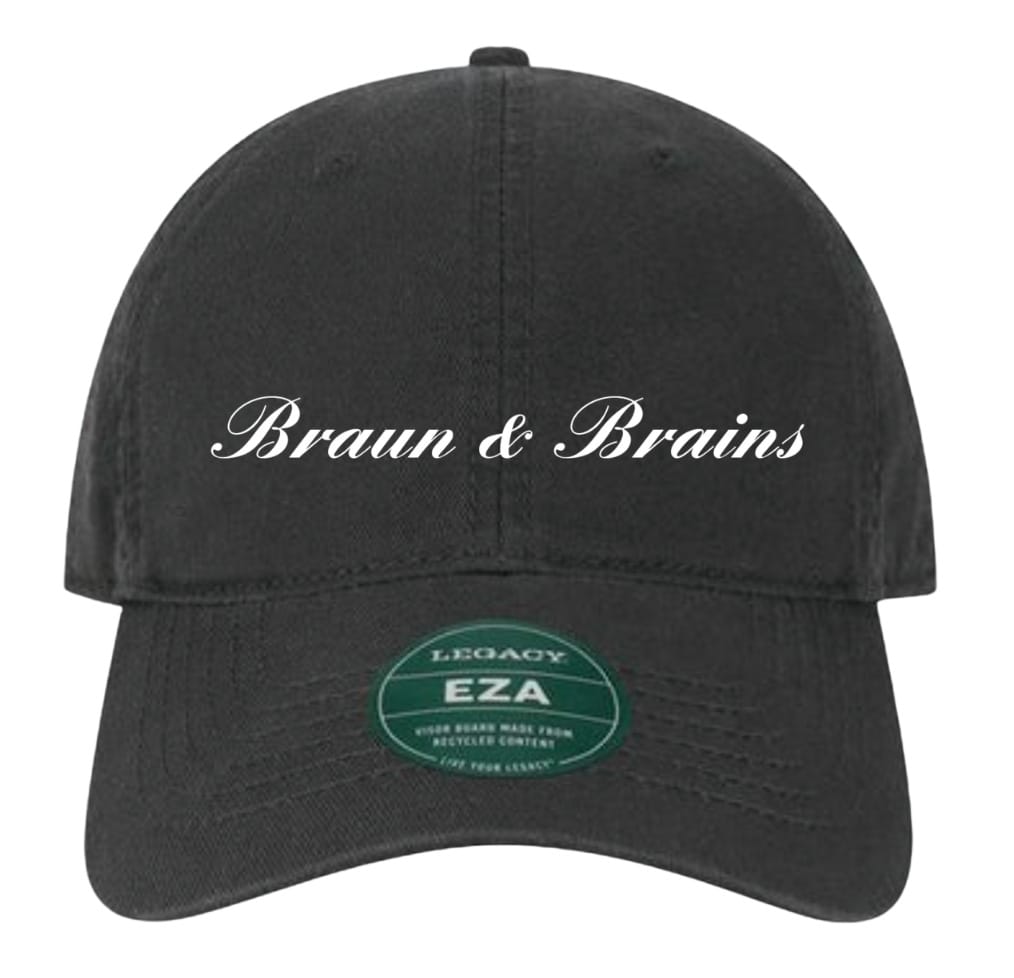
Do you like this or should I pick a different font?? This felt a little fancy, I liked it.
If you’d like to sponsor a tech event in the future, respond to this email. I have a good reputation for throwing tech and VC events around the city, and my email list/previous attendees include some of the best operators, investors, founders, and family offices. We can get fun with it. Or not, whatever floats your boat.
And with that, lets get into some tech news.
Tech News
Hot online
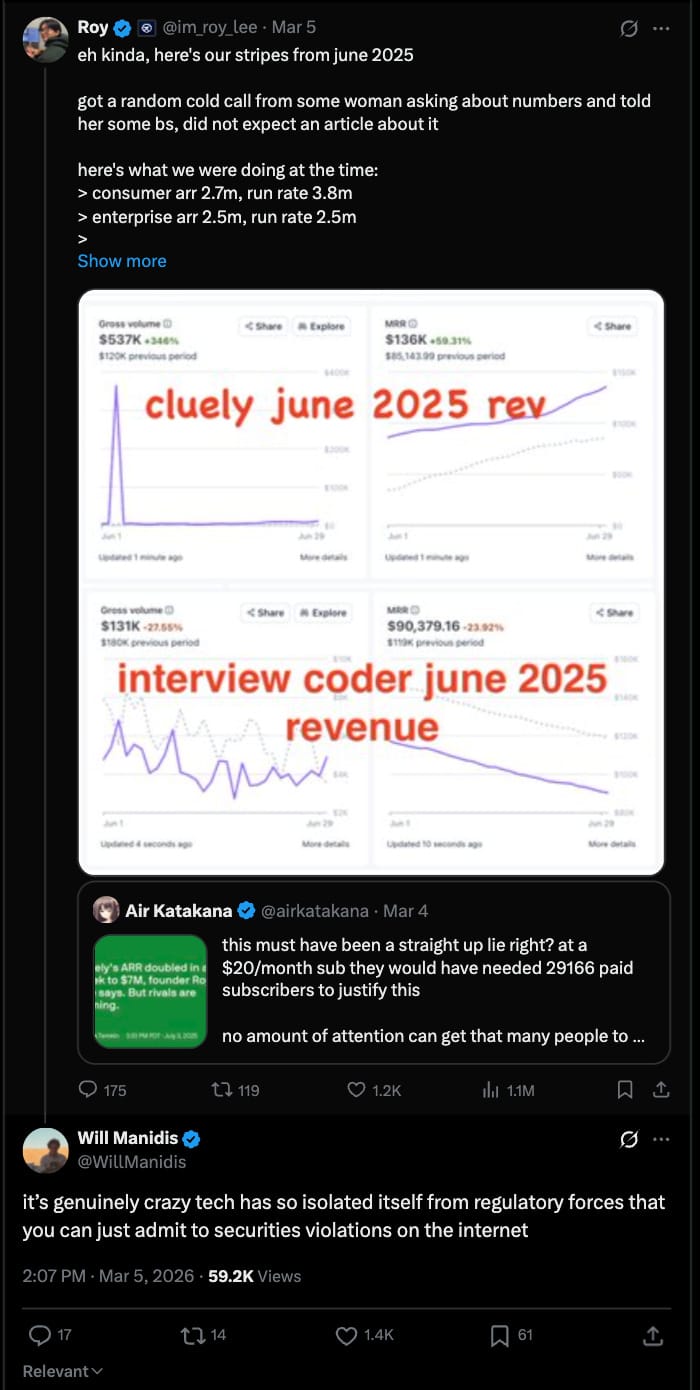
Cluely, the company that pivoted from a tool that let people secretly cheat in job interviews to an AI meeting note-taking product, is in hot water again after its CEO, Roy Lee, admitted he lied to TechCrunch about the company having $7M in recurring revenue. Lee said he gave the number after what he described as a “bs cold call” from someone at TechCrunch. However, TechCrunch says the interview was actually arranged through the company’s PR team. (TechCrunch)
The internet seems to be separated by the MacBook Neo. Some find it cute, others think it’s a piece of shit. John Gruber at Daring Fireball gave it to us straight and wrote that the Neo is interesting mainly because it’s a $599 Mac that doesn’t seem like a junk computer. Instead of recycling old hardware, Apple appears to have built a cheaper Mac on purpose, likely aimed at students and schools. The bigger shift is Apple moving more seriously into the lower-priced laptop market. (Daring Fireball)
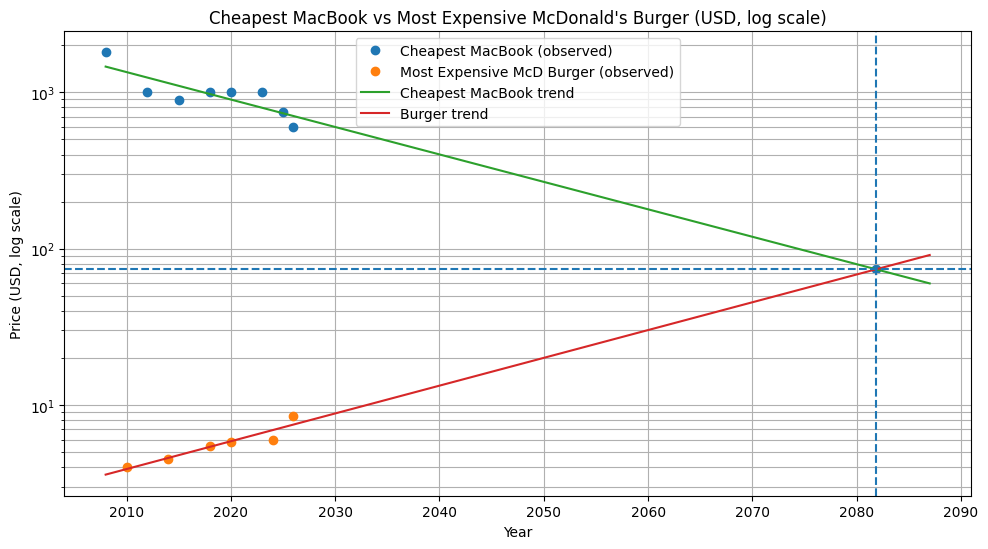
One funny comparison making the rounds: someone plotted the price of the most expensive McDonald’s burger against the cheapest MacBook over time and projected that by 2081 the burger could cost more than the laptop.(Tweet)
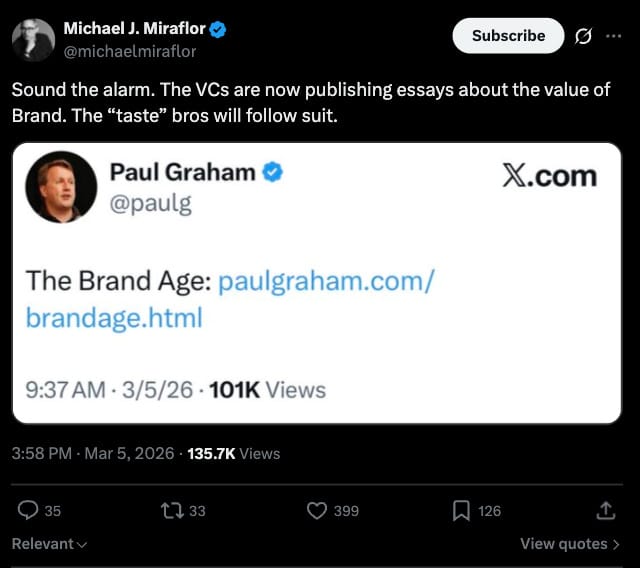
Paul Graham dropped a new essay about the Brand Age that shook the internet a little. TLDR, he wrote that a ton of industries have shifted from competing on product quality to competing on brand and status. When products become similar in function, companies have to lean more on image, storytelling, and prestige to justify higher prices and differentiate themselves. He thinks that the best builders should focus on creating genuinely great products, because real innovation usually happens outside brand-driven markets. (Paul Graham)
I also think a lot of consumers are already here. For example, people realized the heavily branded Always Pan wasn’t actually that great and started buying cheaper, better pans from restaurant supply stores instead. Will “brand” be the hot word? “Taste” was so last week.
The Workplace
Speaking of buzzwords, a study found that employees who are impressed by corporate buzzwords like “synergistic leadership” may be worse at practical decision-making. In a study of more than 1,000 office workers, people who thought jargon-heavy statements sounded “business savvy” scored lower on tests of analytic thinking. (Cornell)
AI is beginning to automate the outsourced white-collar work that built India’s tech economy. The industry employs more than six million people, but hiring has slowed and some companies have already cut staff as tools take over tasks like recruiting, customer service, and coding. (New York Times)
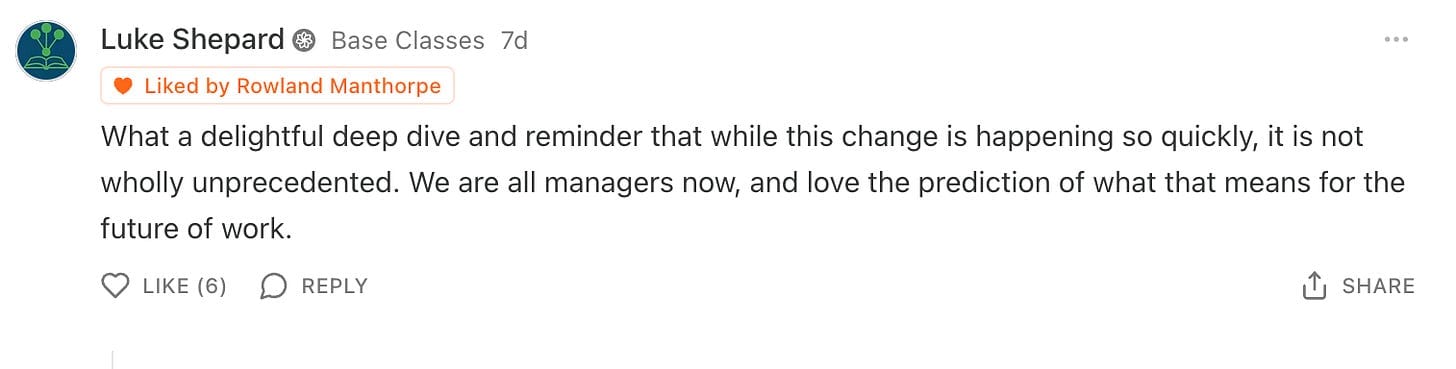
Related: Rowland Manthorpe had a great Substack about the last big wave of automation, driven by personal computers, and how it reshaped office work by eliminating most of the traditional secretarial roles. In the 1970s, clerical and secretarial jobs made up nearly 20% of the workforce because every administrative task required a person. Computers gradually automated many of those tasks and spread the remaining work across employees. Rowland noted that AI could follow a similar pattern, with people increasingly managing and directing machines. (Rowland’s newsletter)
Get Creative
This is a great resource for understanding how AI image generators work. Instead of drawing an image from scratch, diffusion models start with random noise and gradually refine it, using your text prompt as a guide to navigate toward an image that matches what you described. (Lighthouse Software)
A tutorial for how to use Claude Cowork to create short form videos from your podcasts or longform videos. (Brooke Wright)
Money Moves
Anduril is reportedly raising ~$4B at a $60B valuation, with a16z and Thrive Capital leading the round. Founder Palmer Luckey has been saying for years that the future of warfare will be autonomous, and Anduril builds AI-driven drones, sensors, and defense systems aligned with that vision. This is coming as debate is getting more spicy in Silicon Valley about AI’s role in the military, including Palmer calling out companies like Anthropic for limiting how their models can be used by the Pentagon. Eyes are also on Anduril’s planned Arsenal-1 megafactory, which aims to mass-produce autonomous defense systems at scale. (Seeking Alpha)
Science Corp raised $230M to help bring its retinal implant to market, a device designed to restore vision for people with advanced macular degeneration. In early trials, the implant helped most patients regain some central vision. (Bioworld)
Starface, the cute pimple patches loved by teens across the nation, raised $105m. I love to see this. (A NYC company!!!!) (Business of Fashion)
Eight Sleep, the creators of a wildly expensive mattress I would love to own, raised $50m at a $1.5b post-money valuation. (ALSO a NYC company!!) (Health Tech World)
Reply